How to add a deceased loved one to a family photo — a gentle guide.
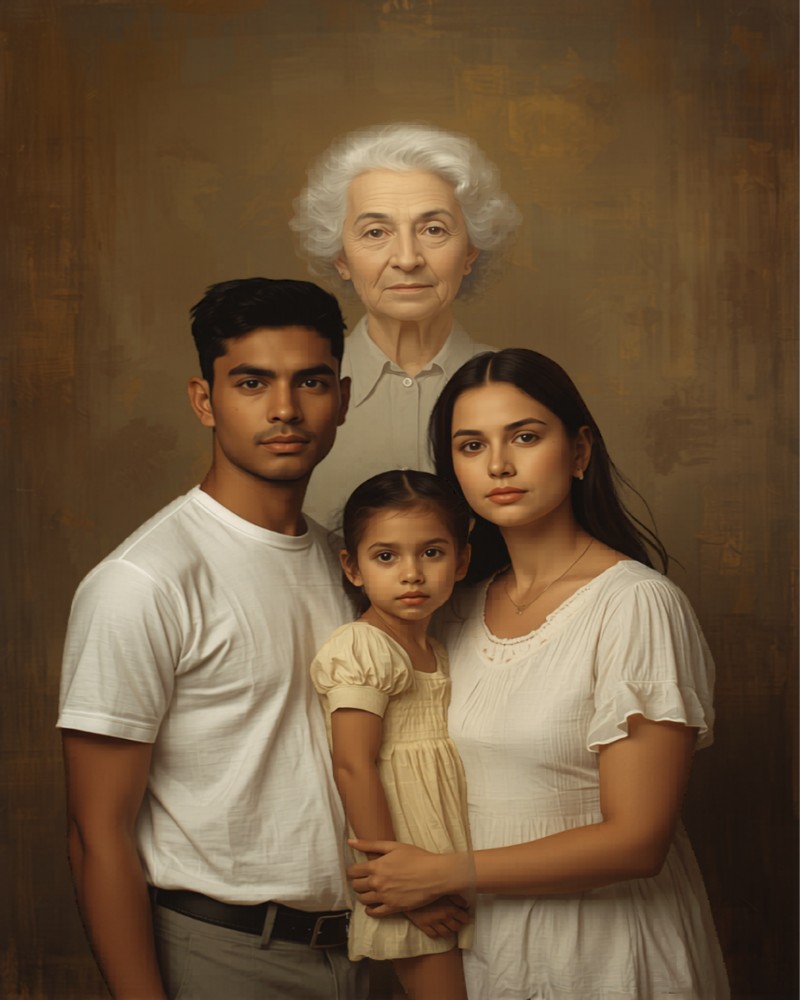
There is a particular ache in looking at a beautiful family photograph and seeing who is missing from it. The wedding portrait without the father who should have walked someone down the aisle. The holiday picture with one chair that will always feel empty. The new grandchild a grandmother never got to hold.
Families have always found ways to keep the departed present — a framed photo on the mantel, a locket, a name passed down. Today, it is also possible to do something quieter and more complete: to add a deceased loved one to a family photo, so the whole family is finally in one frame. Done respectfully, the result is not strange or ghoulish. It is comforting — the picture that should have existed.
This guide walks through the honest options, what each one costs, and how to choose.
First, gather what you have
Every method below starts the same way: with one reasonably clear photograph of the person who has passed. It does not need to be professional. A snapshot from a birthday, a driver's-license-style portrait, even a photo of an old printed picture taken with your phone — all of these can work. What matters is that their face is visible and not too blurry. If you have several photos, choose the one where they look most like the way your family remembers them.
You will also want the photo (or photos) of the rest of the family that you would like them joined into. These can be from entirely different years and places — that is the point.
Option one: simple photo editing
A freelance photo editor — or a patient family member with editing software — can cut a person from one photo and place them into another. This is the most literal approach, and for casual purposes it can be enough. Its limits show quickly, though: lighting rarely matches between two photographs taken years apart, the pasted figure tends to float slightly apart from the group, and the final image inherits the resolution of its weakest source. It can look like what it is — two photos combined — rather than one moment.
Option two: quick AI photo apps
A newer generation of phone apps will merge a loved one into a photo in seconds. They are inexpensive and fast, and for a casual remembrance shared in a group chat, they may be all you need. The trade-offs are control and dignity: apps frequently redraw faces rather than preserving them, results vary wildly from attempt to attempt, and there is usually no human reviewing whether the output honors the person or caricatures them. For an image you intend to print, frame, and live with, most families want more care.
Option three: a composed memorial portrait
The third path is not an edited photograph at all, but a new portrait — composed from your photographs in a warm, painterly fine-art style, the kind of timeless family portrait you would treasure if everyone could have sat together. The loved one who has passed is not pasted in; the entire portrait is composed around the whole family, so light, color, and presence are unified from the start.
This is the approach we take at Held by Generations. Families upload everyday photos, tell us who each person is, and your photographs are composed into the portrait — including the family member no longer here, rendered with grace. Faces are preserved as they truly were: the glasses he always wore, her particular smile, the hat that was simply part of him. For families who prefer it, a departed loved one can also appear as a gentle, translucent ancestral presence rather than standing among the living — a choice many find deeply moving. You can read more on our memorial portraits page.
Crucially, nothing prints until you approve the composition. You see the finished portrait first, ask for changes if something is not right, and only then is it printed at full 300-DPI resolution on canvas or as a framed fine-art poster and shipped to your door.
How to choose
If you need something quick for a social post, an app will do. If you have two well-matched photographs and modest expectations, an editor can combine them. But if the image is meant to hang on a wall — to be the picture the grandchildren grow up seeing — choose the path with human review, face preservation, and approval before printing. Grief deserves that much care.
Whatever you choose, one gentle suggestion: involve the family member who feels the absence most. Choosing the photographs together, deciding how the loved one should appear — these small decisions are themselves a form of remembrance.
Common questions
Is it disrespectful? Families who create these portraits overwhelmingly describe the opposite — relief, and a sense of completeness. The key is treatment: composed with dignity, never as a gimmick. What photos do I need? One clear photo of each person; see our FAQ for details. Can several generations be included? Yes — up to seven people across three generations; we wrote a separate guide to multi-generation portraits.